
- Plot 217, 39 Industrial, Area Deh Dih Korangi, Karachi.
- Monday to Saturday: 10.00 am - 6.00 pm
Engineered Defense Against Mines, IEDs & Explosive Threats
In modern threat environments, danger does not only come from the sides — it often comes from below.
Landmines, improvised explosive devices (IEDs), and under-vehicle blasts represent one of the most lethal risks to armored transport. Standard vehicles are structurally incapable of absorbing upward explosive force. Without specialized underbody protection, blast impact can penetrate the cabin, damage critical components, and cause catastrophic injury.
At Bulletproof Pakistan, we design and integrate advanced underbody and blast protection systems engineered to deflect, absorb, and dissipate explosive energy — preserving structural integrity and safeguarding occupants.
What Is Underbody & Blast Protection?
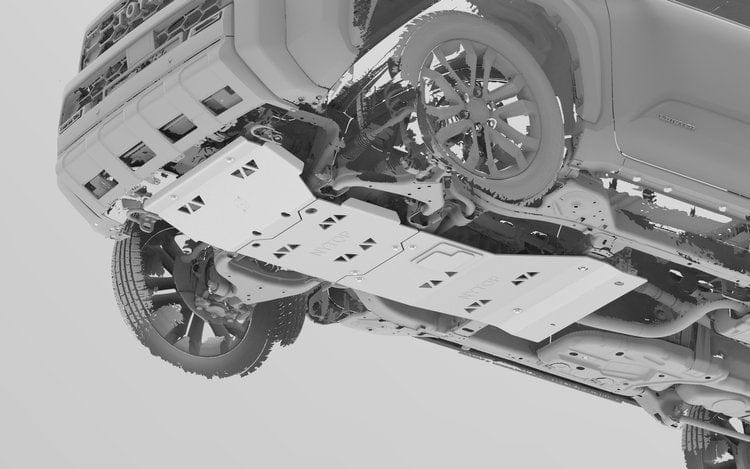
Underbody protection is a reinforced structural armoring system installed beneath a vehicle’s chassis to defend against:
- Landmines
- Improvised Explosive Devices (IEDs)
- Roadside bombs
- Grenade detonations
- Fragmentation threats
It strengthens the most vulnerable section of the vehicle — the floor and drivetrain area — using blast-resistant materials and engineered geometry.
How Blast Protection Works
When an explosion occurs beneath a vehicle, energy travels upward with extreme force. Our systems are designed to:
- Redirect blast waves away from the cabin
- Absorb shock energy through reinforced materials
- Prevent floor penetration
- Protect critical systems (fuel tank, transmission, brake lines)
- Reduce occupant injury from fragmentation
The goal is not only to stop penetration — but to preserve survivability.
Multi-Layered Protection System
Our blast defense solutions typically include:
- Reinforced ballistic steel plating
- Composite energy-absorbing layers
- V-shaped deflection panels (for tactical platforms)
- Reinforced cross members
- Protected fuel and battery compartments
This layered engineering approach significantly increases survivability in high-risk environments.

Types of Underbody Protection We Provide
1️⃣ Flat Reinforced Plating
Ideal for civilian armored SUVs and executive vehicles.
Provides protection against fragmentation and moderate blast threats.
2️⃣ V-Shaped Blast Deflection Systems
Designed primarily for military and high-threat applications.
Deflects explosive force outward and away from the cabin.
3️⃣ Fuel Tank & Component Shielding
Critical systems are enclosed in blast-resistant compartments to prevent secondary explosions.
4️⃣ Floor Reinforcement & Anti-Spall Layers
Prevents metal fragmentation from penetrating the interior cabin.
Vehicles We Equip With Blast Protection
- Armored SUVs
- Tactical transport vehicles
- Armored Personnel Carriers (APCs)
- Government fleet vehicles
- NGO transport vehicles
- Law enforcement platforms
Each vehicle is evaluated individually to determine optimal reinforcement strategy.
Engineering Considerations
Underbody protection adds weight and structural stress. Our engineering team carefully manages:
- Weight distribution
- Suspension reinforcement
- Ride height adjustments
- Ground clearance preservation
- Brake system upgrades
We ensure that added protection does not compromise mobility or drivability.
Testing & Compliance
Our blast-resistant systems are engineered in accordance with recognized ballistic and blast protection standards.
Protection levels can be customized depending on:
- Threat assessment
- Operational region
- Vehicle category
- Required protection certification
Independent laboratory testing and structural validation ensure performance reliability.
Why Underbody Protection Is Critical
Statistics show that under-vehicle explosions are among the most severe threats in conflict or high-risk zones. Without reinforcement:
- Explosive force penetrates cabin flooring
- Fuel systems may ignite
- Structural frame may collapse
- Occupant survivability drops drastically
Underbody protection transforms vulnerability into structural defense.
Who Requires Underbody & Blast Protection?
These systems are essential for:
- Government security fleets
- Military transport units
- VIP convoy operations
- NGOs operating in unstable regions
- Diplomatic missions
- High-risk corporate security transport
Any vehicle exposed to roadside threats requires engineered blast resistance.
Materials Used in Blast Protection
We utilize:
- High-hardness ballistic steel
- Advanced composite armor panels
- Energy-absorbing structural layers
- Anti-spall protective coatings
Material selection is based on threat level and vehicle load capacity.
Maintenance & Inspection
Blast protection systems require:
- Routine inspection for structural integrity
- Post-impact evaluation
- Corrosion resistance checks
- Reinforcement upgrades
Our lifecycle maintenance programs ensure sustained protection performance.
Example Technical Specifications
- Reinforcement Material: Ballistic-grade steel/composite
- Installation: Full undercarriage integration
- Coverage Area: Cabin floor, fuel system, drivetrain
- Protection Focus: Blast deflection & fragmentation resistance
- Customization: Based on threat environment
(Custom specifications provided upon request.)
Why Choose Our Blast Protection Solutions?
✔ Engineered for real-world explosive threats
✔ Custom-built to vehicle platform
✔ Balanced weight and performance integration
✔ Multi-layered energy absorption
✔ Government & security-grade solutions
✔ Full installation and lifecycle support
We do not just armor vehicles — we engineer survivability.
Request a Blast Protection Consultation
Our experts will:
- Evaluate your operational risk
- Assess vehicle compatibility
- Recommend appropriate blast level
- Provide engineering integration plan
- Deliver professional installation
Protect what matters most — from the ground up.